There’s a particular kind of tired that a vacation doesn’t fix anymore. You come home from four days of somewhere beautiful and within an hour you’re back in the same overstimulated loop — phone in hand, inbox blinking, the version of you that knows how to breathe slowly nowhere to be found. So the wellness world did what it always does when something breaks: it stopped trying to escape the problem and started redesigning around it. Enter the at-home retreat — 2026’s answer to a culture that can’t keep taking Fridays off to find peace.
This isn’t the “spa bathroom” trend your contractor’s been pitching you, and it isn’t a Pinterest board of candles you’ll light twice. It’s smaller and stranger and more personal than that: one room, or even one corner of a room, deliberately built to hold you when you need to come back to yourself. Designers are calling it the “at-home retreat” movement, and it’s less about renovation and more about ritual — natural materials, low light, a chair that asks nothing of you, an object that means something. You don’t need a soaking tub or a converted attic. You need one honest square footage of your home that’s working for your nervous system instead of against it.
We pulled together five real, livable ways to build that room — each one grounded in an actual space, not a mood board fantasy. Steal one, steal all five, or just steal the feeling.
1. The Threshold Ritual
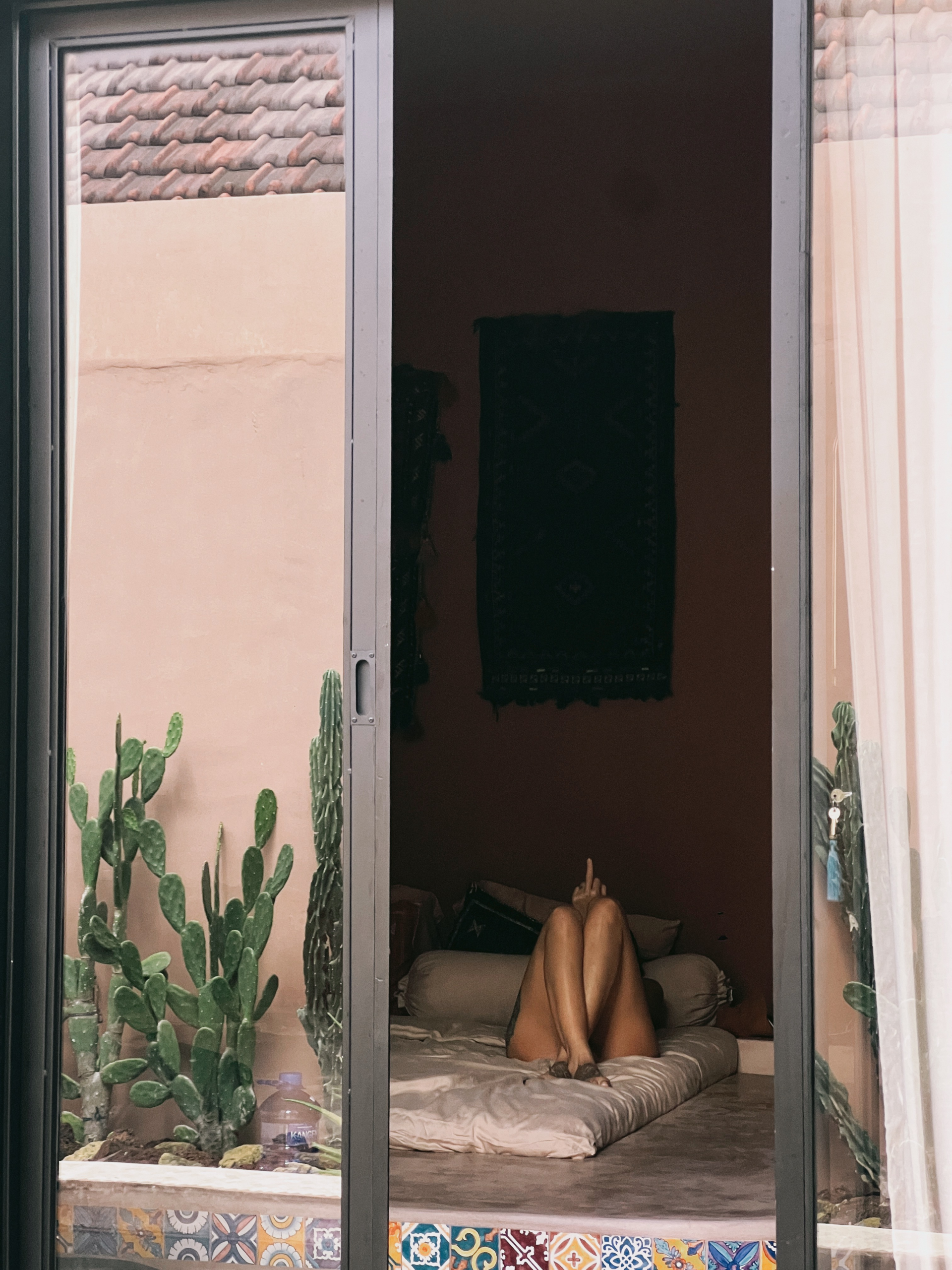
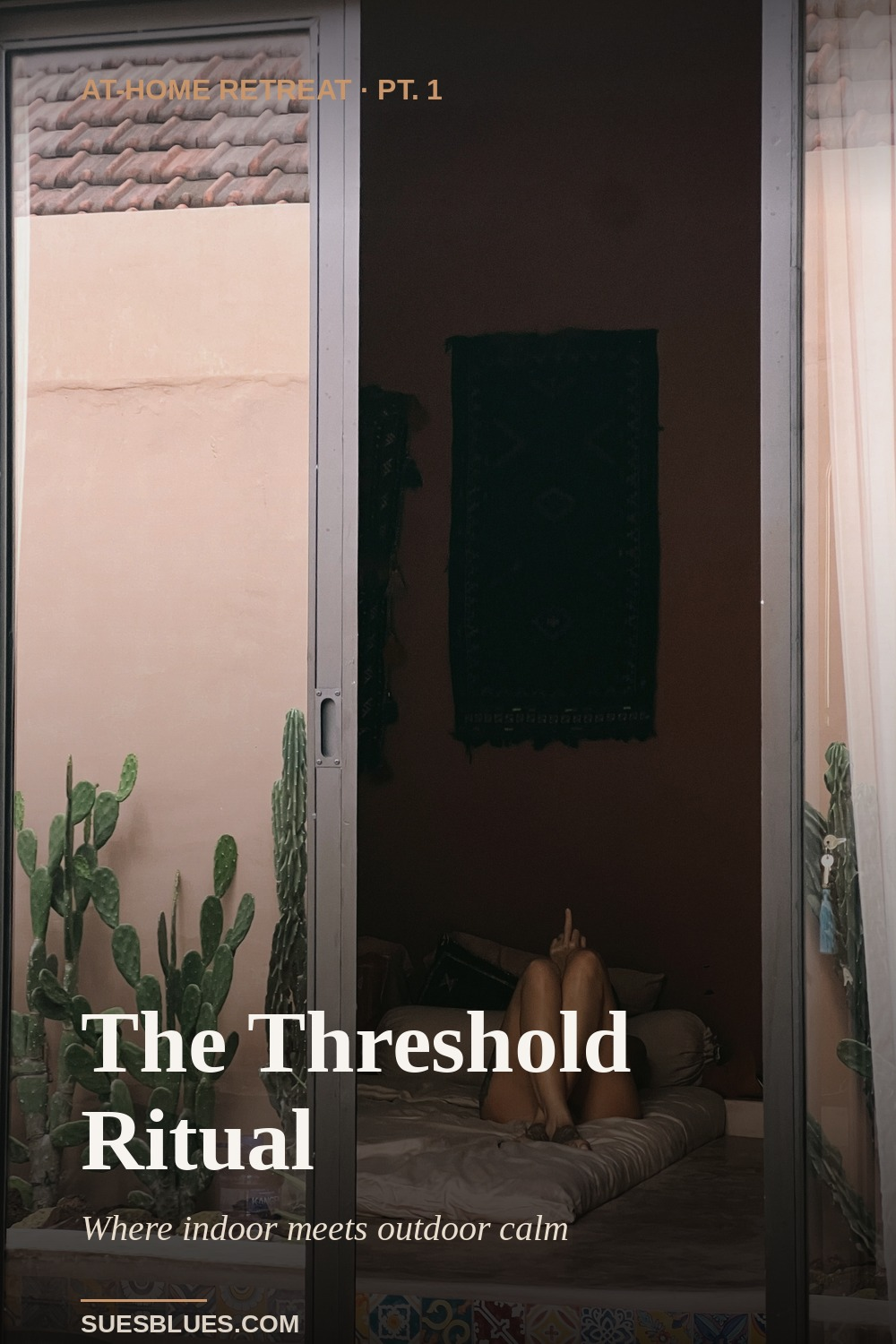
Every retreat needs a doorway — a literal, physical line you cross that tells your body “we’re somewhere else now.” Here, it’s a wall of glass doors thrown open to a small courtyard of cacti and terracotta, blurring the edge between inside and out. The bed itself sits low, almost on the floor, more floor cushion than furniture — a deliberate choice that changes how you hold your body. Low to the ground reads as grounded. Literally.
If you’re building this at home, look for the room in your house that already has the best relationship with natural light and air, even if it’s not the “right” room for it. A guest room, a reading nook, an underused corner of the primary bedroom. Pull the furniture down and out — floor cushions, a low daybed, a folded quilt — and let whatever is outside your window (even if it’s just a fire escape and a tree) become part of the room instead of something separate from it.
2. The Wind-Down Corner
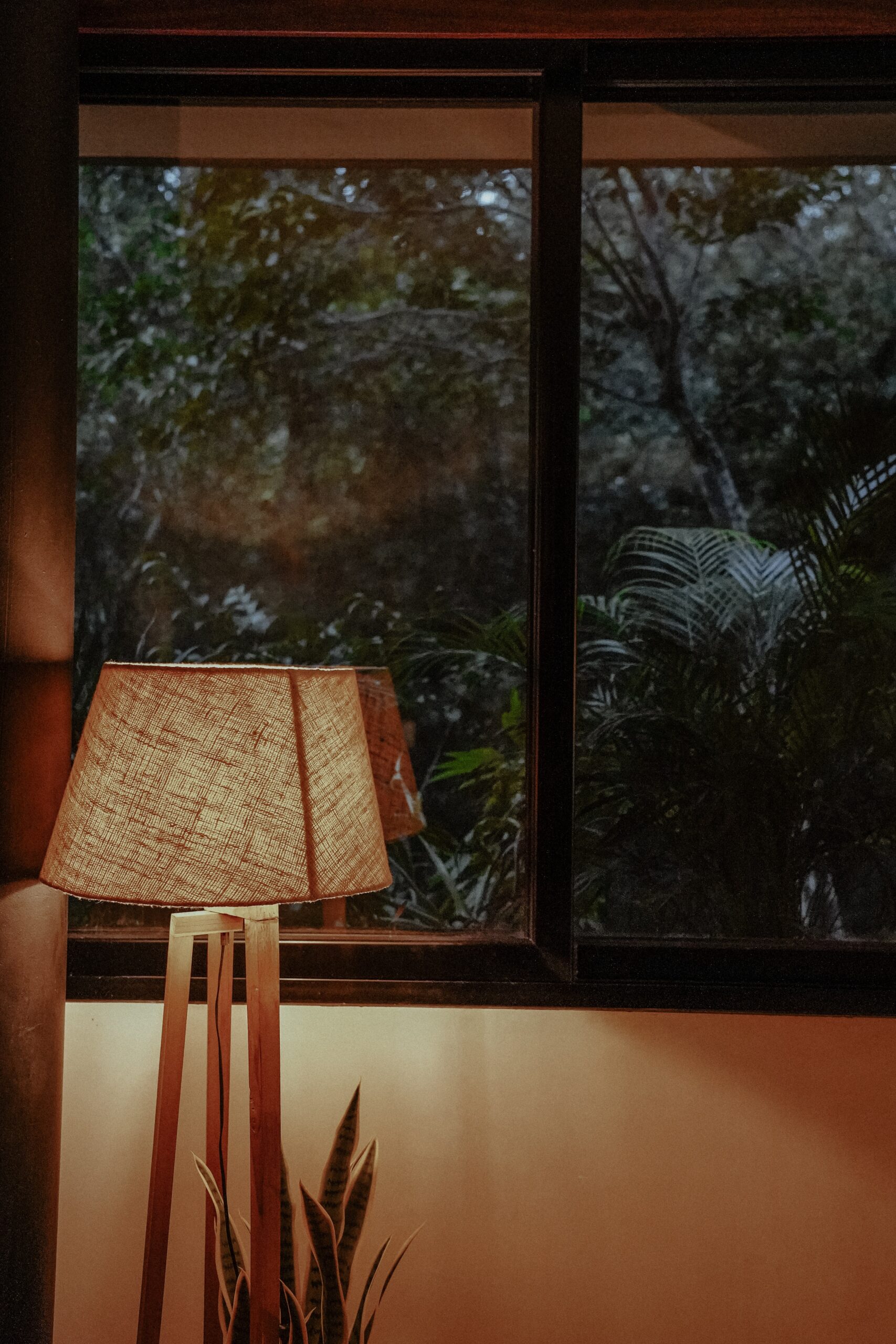
This is the single easiest retreat element to install tonight: a lamp that makes you want to stay in the room. Not overhead lighting — 2026’s decor trends have officially declared war on the flat, cold glare of a ceiling fixture — but a low, warm, textural light source that pools instead of floods. This one’s a simple linen-shade floor lamp, doing more emotional work than almost anything else in the room.
The science backs up the vibe: warm, dim, low-angled light cues your body toward melatonin production the same way dusk does. Pair the lamp with one plant that has some presence — a snake plant, a fiddle leaf, anything with structure — positioned so it catches the light and throws a shadow. This is the corner where a book actually gets finished instead of scrolled past.
Shop the pick:
3. The Stillness Lounge
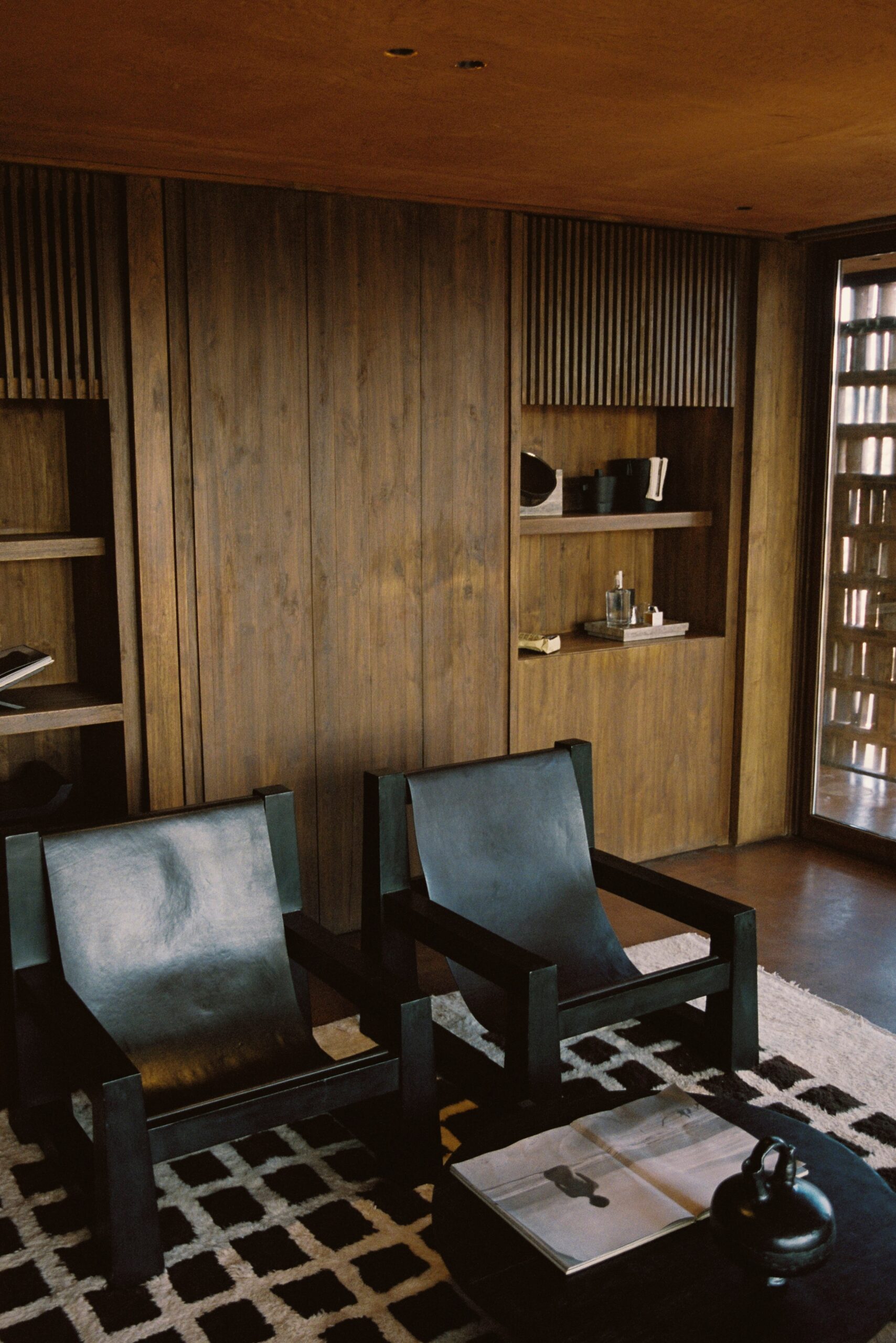
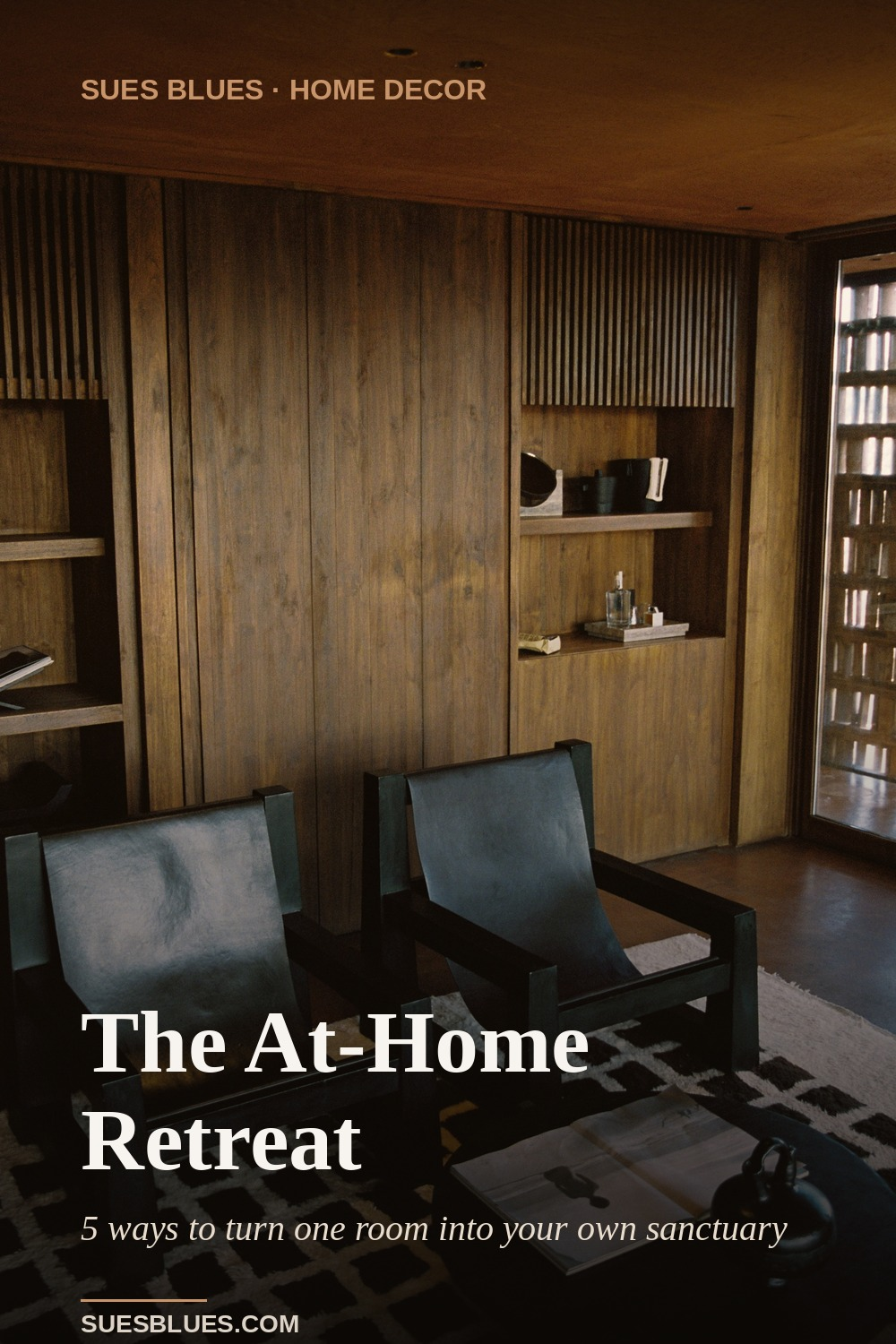
Materials do more work in a retreat space than almost anywhere else in the house, because this is a room you’re meant to feel with your body, not just look at. Warm wood paneling, supple leather, a boldly graphic rug underfoot — nothing here is precious or fussy. It’s tactile, a little architectural, more “quiet lodge” than “showroom.”
This is the room’s anchor: two chairs, facing each other, built for actual sitting rather than styling. If you take one thing from this section, take this — buy furniture for your retreat room that you’d choose even if no one ever saw it. A retreat isn’t for guests. It’s the one room in the house allowed to be entirely, unapologetically for you.
Shop the pick:
4. The Unplugged Hour
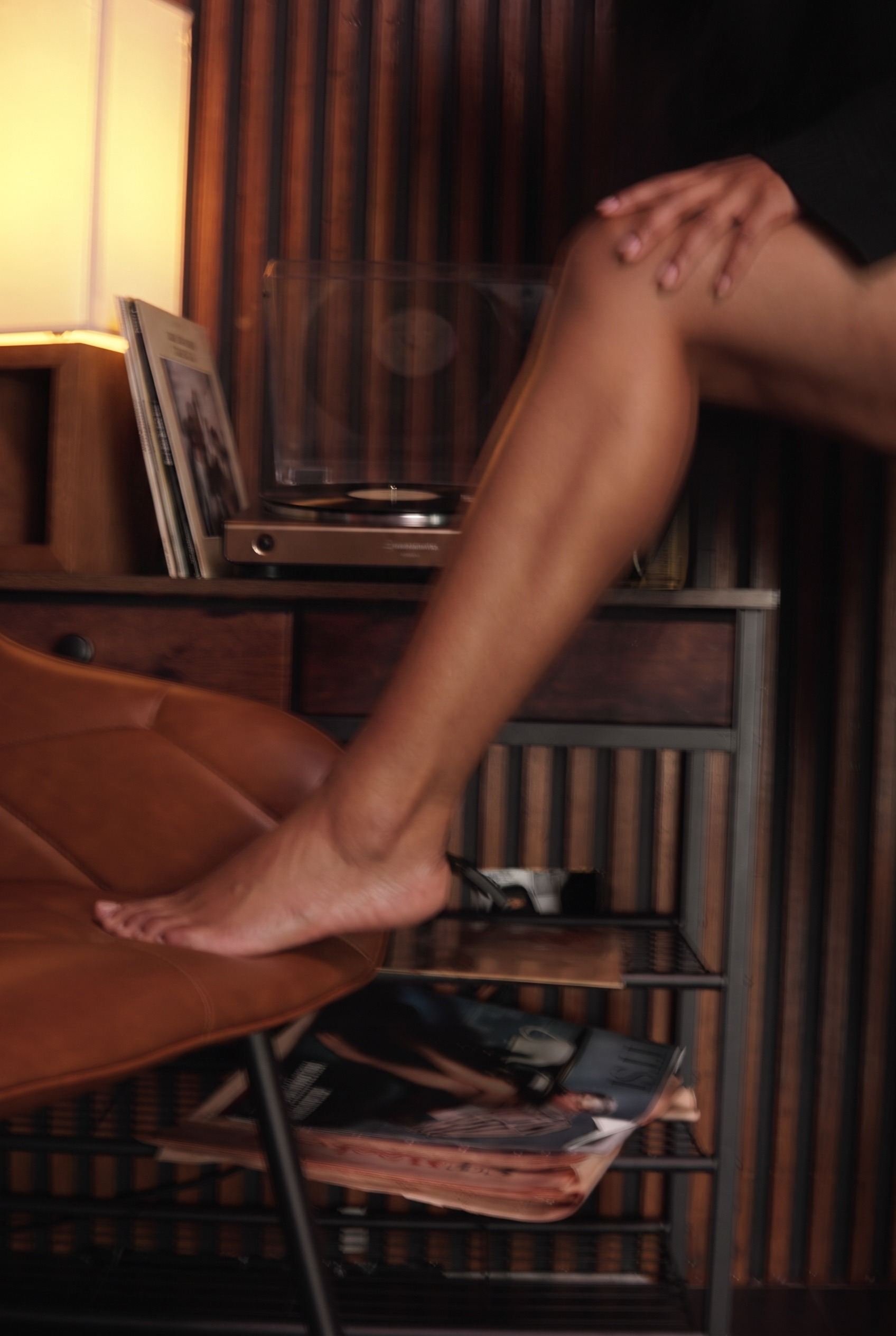
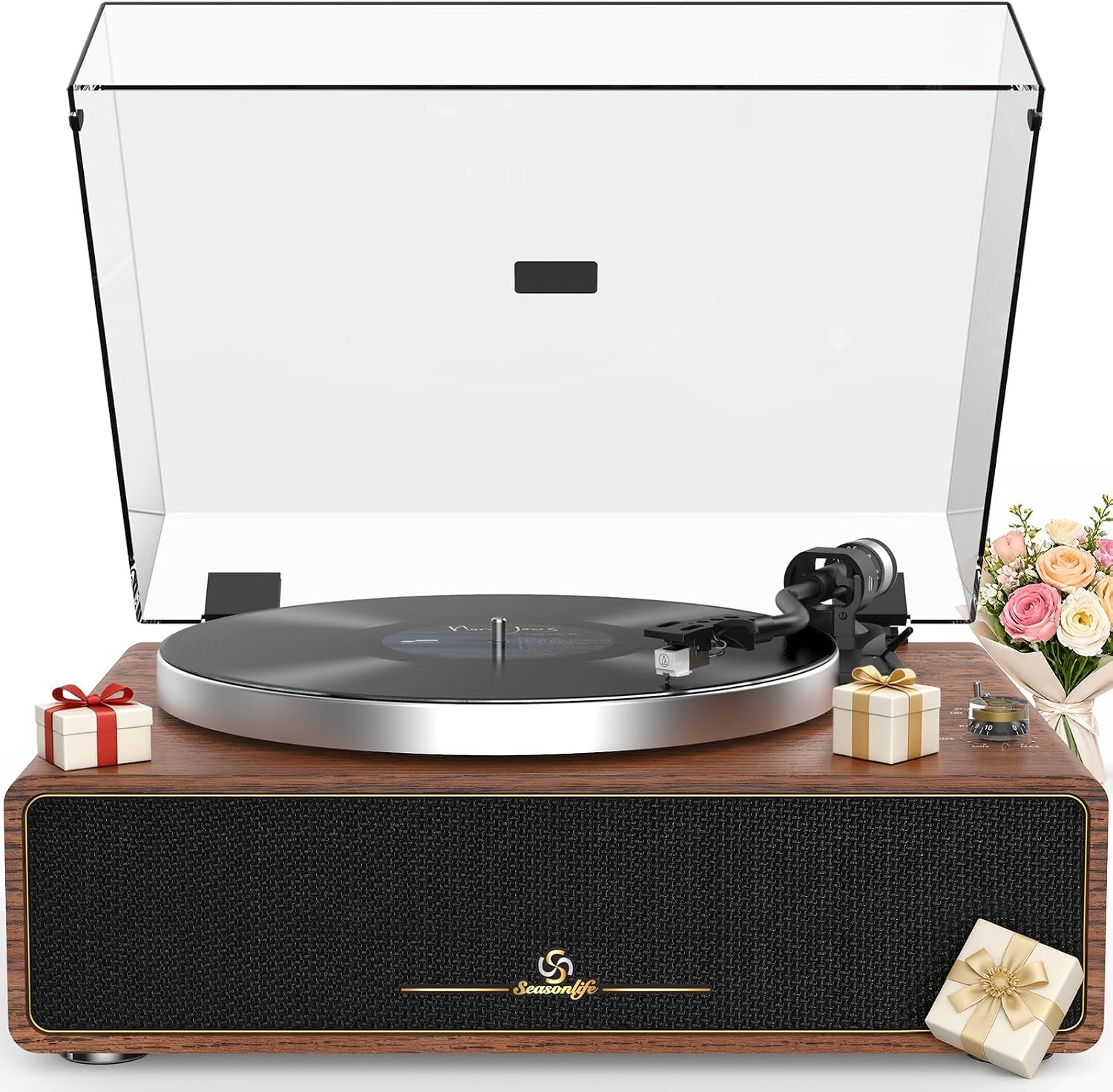
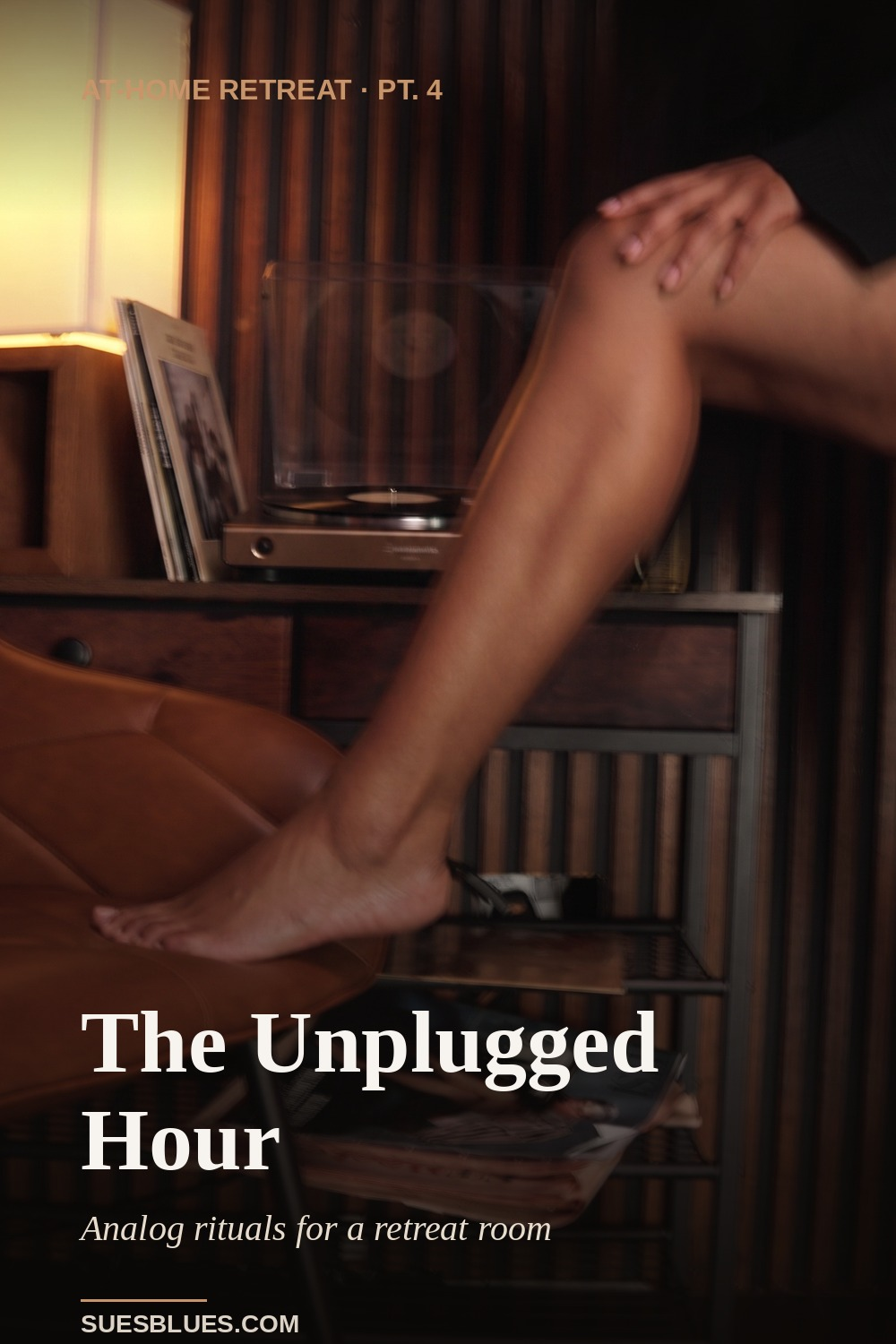
No retreat is complete without something analog in it — an object whose entire job is to slow you down because it can’t be sped up. A record player is the obvious pick (you cannot doomscroll while flipping a record), but the principle applies to anything: a French press instead of a pod machine, a real book instead of a tab, a puzzle, a journal with an actual pen.
Keep this object visible and within arm’s reach of your main seat, not tucked in a cabinet you’ll forget about. The goal is friction — something slightly inconvenient that rewards you the moment you choose it over your phone.
5. The Energy Reset
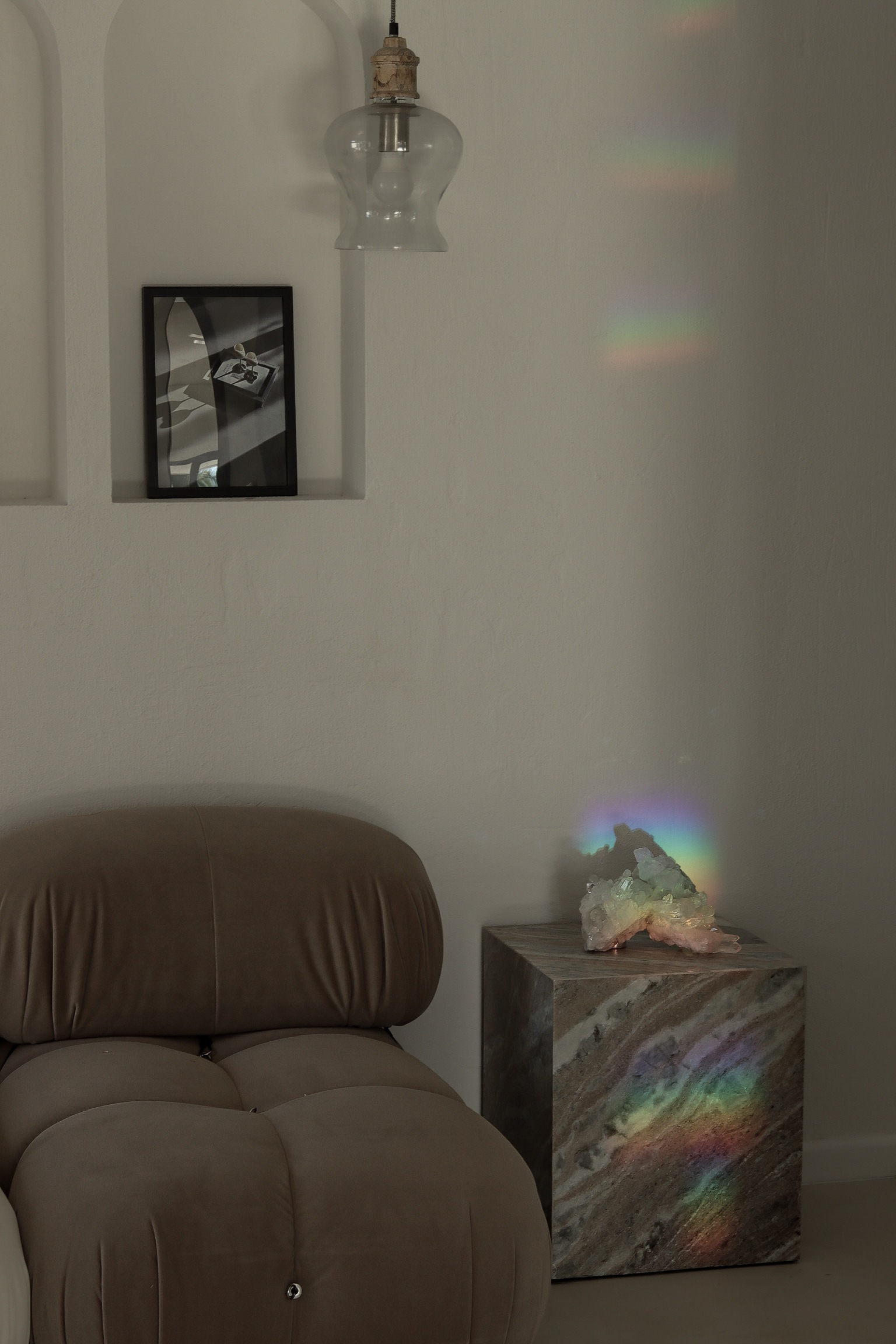
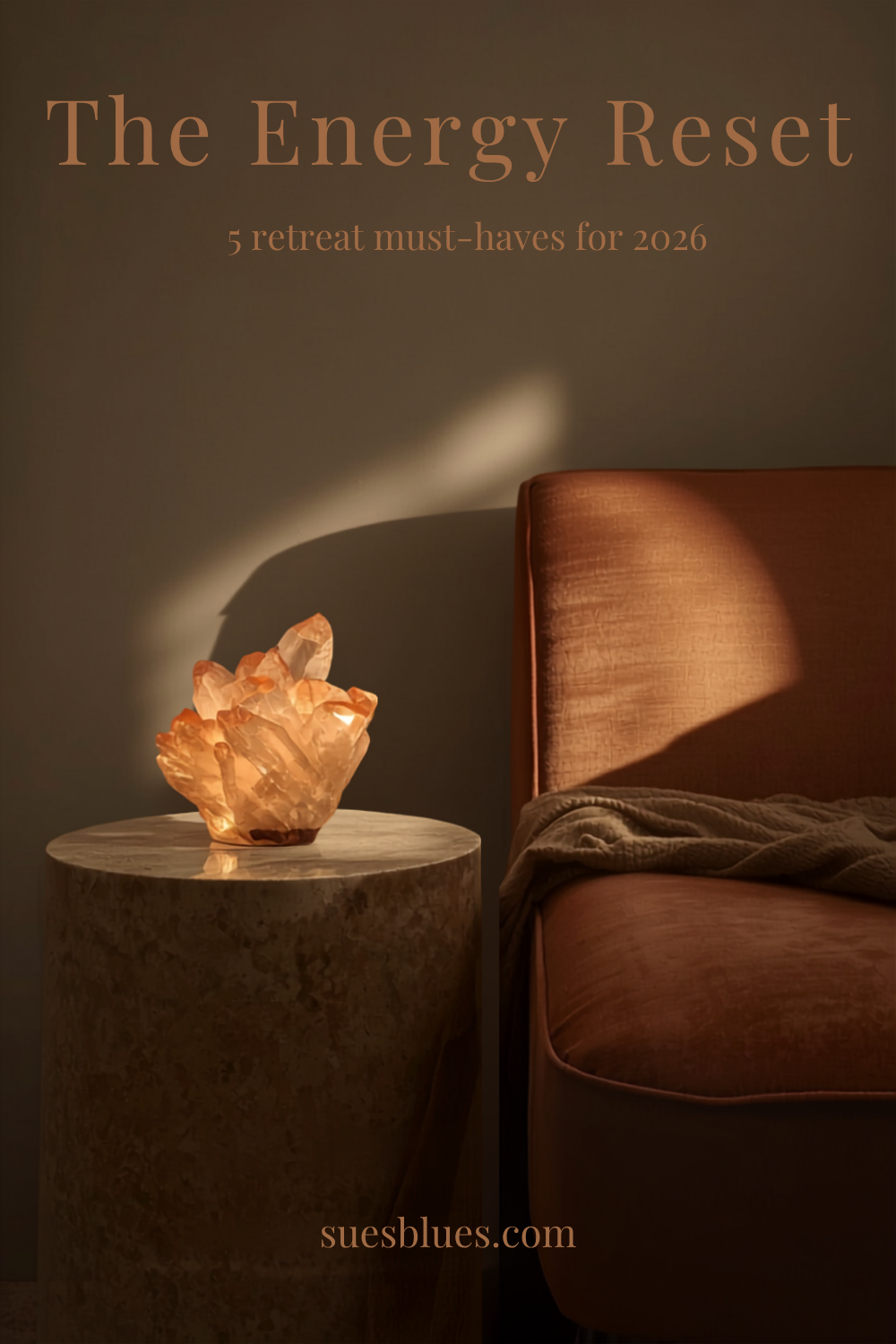
Call it design, call it a little bit of woo — either way, this last layer is the one that makes a room feel alive instead of just styled. A raw crystal cluster catching afternoon light, thrown across a plain wall in an accidental rainbow, does something a piece of framed art can’t: it changes throughout the day, which means the room never fully finishes decorating itself. It rewards you for simply being present in it.
You don’t need to buy into crystal healing to understand why this works — it’s the same reason people love a fireplace or a fish tank. Something in the room is quietly, slowly happening, and it asks you to notice. Add one object like this to your retreat corner: a prism, a candle you actually burn, fresh flowers you have to tend. Something with its own small, ongoing life.
Shop the pick:
This is one of my favorite bedroom reset options.
The Real Point
None of this requires a renovation, a design budget, or even a spare room. The at-home retreat trend has quietly become 2026’s most useful design idea precisely because it’s not about square footage — it’s about naming one part of your home as off-limits to your to-do list. A corner. A chair. A lamp you actually love. The room doesn’t need to be big. It just needs to be yours.
Quick Answers
What is an “at-home retreat” in interior design? It’s a dedicated space — a full room or even a single corner — designed specifically for rest, mindfulness, or unplugging, using natural materials, warm low lighting, and personal, sensory objects rather than screens or clutter.
Do I need a spare room to create one? No. A reading chair, a corner of a bedroom, or even a well-lit windowsill can function as an at-home retreat if it’s furnished intentionally and reserved for slowing down.
What’s the fastest way to start? Swap one overhead light for a warm lamp, and remove one screen from the space. Those two changes alone shift how a room feels within a day.