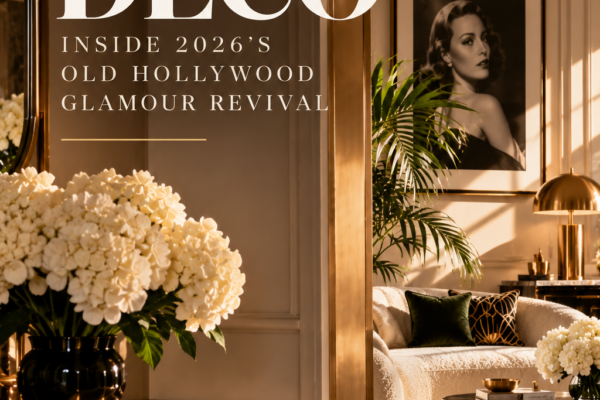
Trends come and go. Glamour doesn’t. That’s the thing about old Hollywood style, it never really left, it just waits for the rest of the world to catch back up to it. This year the design world finally gave it a name: Neo Deco. Chevrons, sunbursts, brass and chrome, lacquered wood, jewel tone velvet instead of primary color drama. But before it was a 2026 trend report, it was just how the most glamorous women in the world lived.
There is a building on the Sunset Strip that has been proving this point since 1931. It’s called Sunset Tower, and if you want to understand why Neo Deco isn’t really new at all, this is where the story starts. First though, a little history.
A Short History of Art Deco, and Why Hollywood Fell for It First
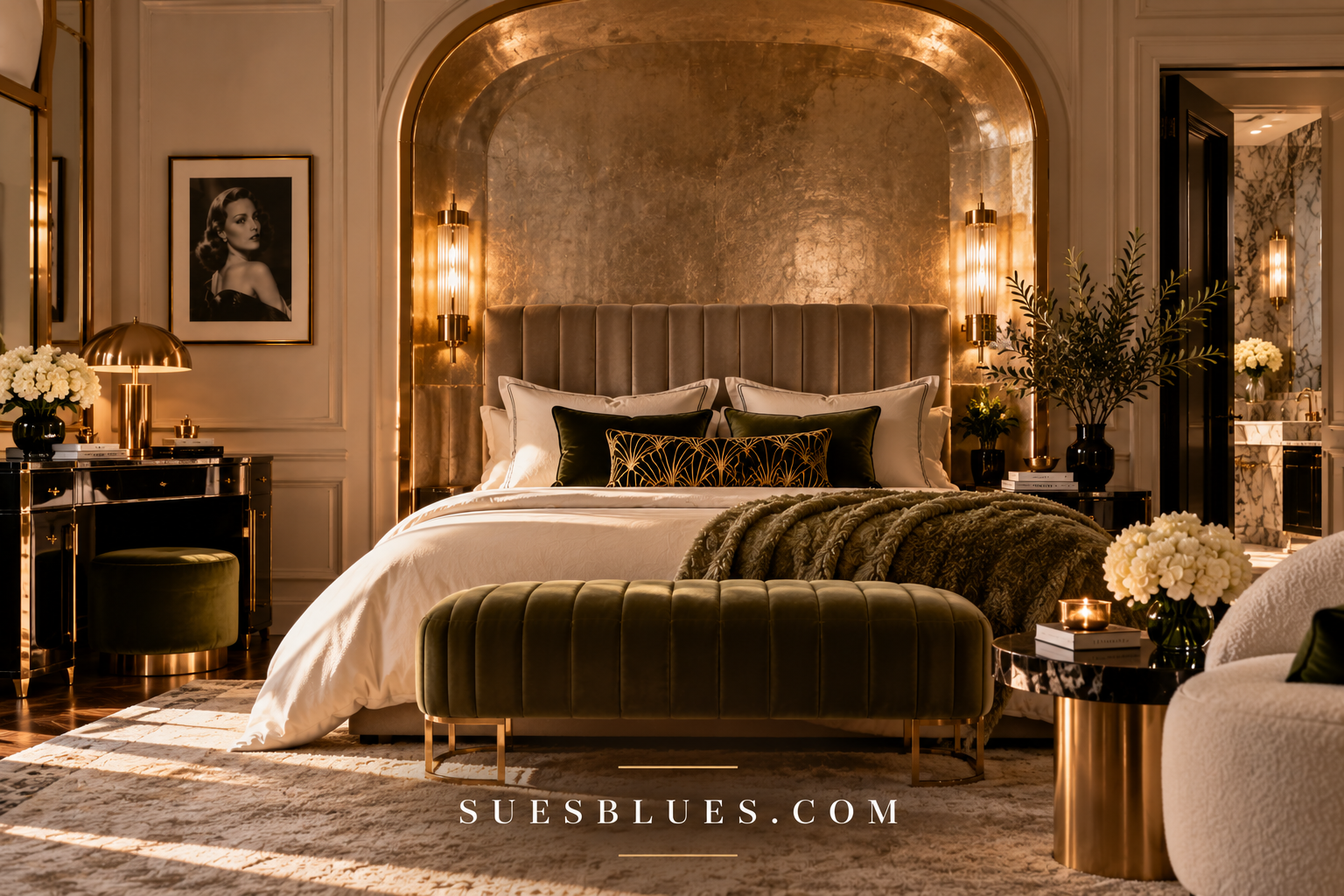 Art Deco was born in Paris in 1925, at the Exposition Internationale des Arts Decoratifs et Industriels Modernes, the world’s fair that gave the style its name. It was meant to be the opposite of everything that came before it, no more fussy Victorian ornament, just clean geometry, rich materials, and machine age optimism dressed up in gold and lacquer.
Hollywood adopted it almost immediately, and it makes sense why. The studio system was building an entire industry on aspiration, on selling audiences a version of life more glamorous than their own. Art Deco was the physical language of that promise. It showed up in the movie palaces built to premiere the films, it showed up in the apartment buildings and hotels built to house the stars, and it showed up on screen in set design that told audiences exactly how the glamorous were supposed to live. The style and the industry grew up together. Neo Deco is really just Hollywood’s original marketing material, a century later.
What Neo Deco Actually Is
Design writers are calling it Art Deco’s younger, more livable cousin. The bones are the same geometry that defined the 1920s and 30s, chevrons, zigzags, starbursts, fan arches, but the palette has softened. Instead of bold primary jewel tones you get muted sapphire, emerald and gold against ivory and light grey. Instead of committing a whole room to the look, the advice from designers is to build around one statement piece, a mirror, a light fixture, a piece of furniture, then let it breathe. Lacquered wood, marble inlay, and brass or chrome trim do the rest of the work.
It is, in other words, exactly the kind of glamour that never announces itself too loudly. Which is the whole point.
Effortlessly Chic, Even Off Duty
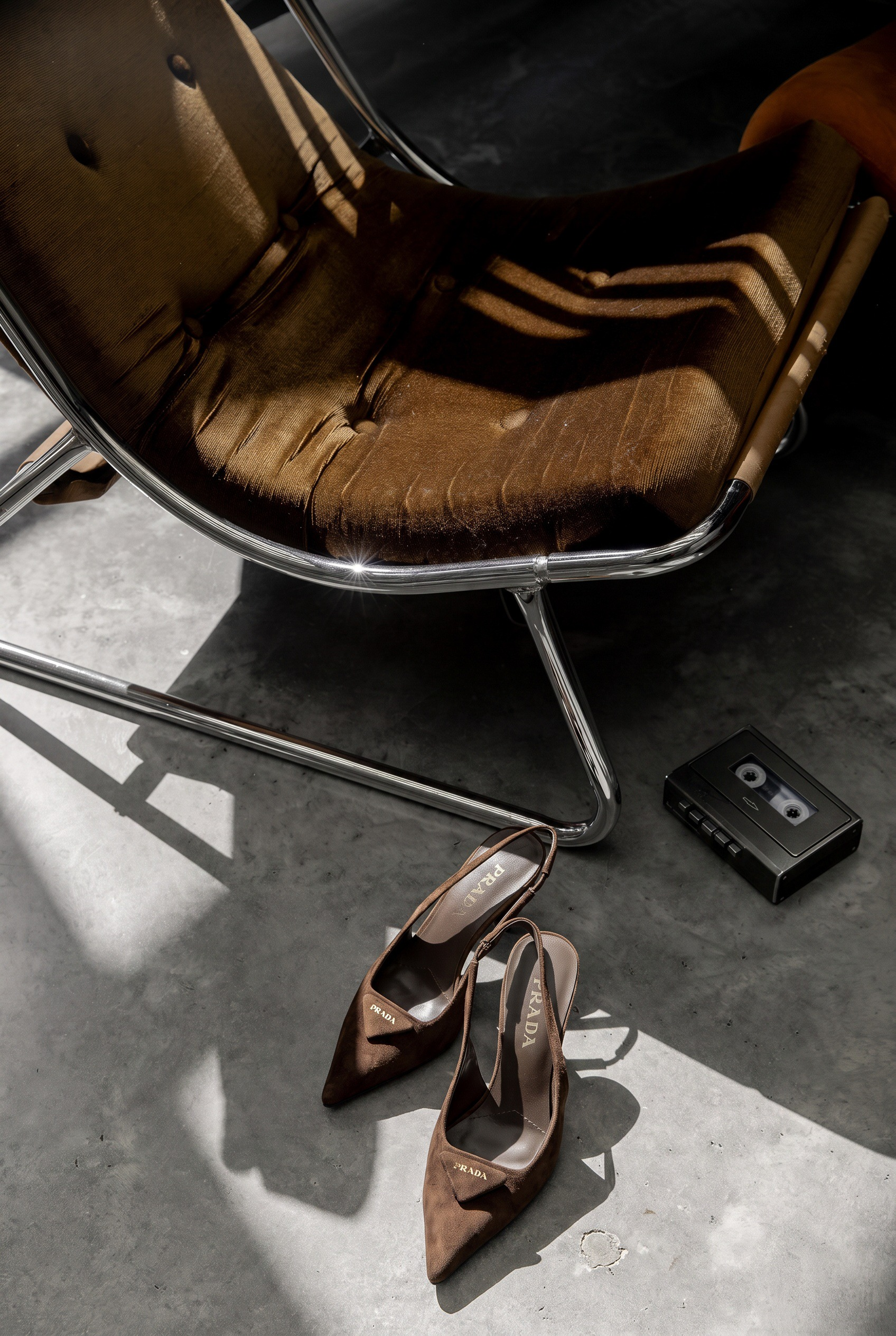
Watch any awards season and you’ll see it, actress after actress doing her very best to channel Jean Harlow, Rita Hayworth, or Audrey Hepburn. It happens over and over because it works. I’ve written before about what actually made Audrey Hepburn’s beauty last, and it wasn’t a formula anyone can buy off a shelf.
My own favorite has always been Lauren Bacall, and it isn’t close. Old Hollywood has always held a special place in my world, the timelessness, the effortlessness, the class and grace, we have come so far from that in our modern times. Bacall wasn’t like the others. She had her own style, her own way about her. Those big, oversized glasses that most people wouldn’t dare try to pull off, Bacall didn’t have to try, she just did. She moved with a glide that gave you a sense she was walking on air. Quiet elegance and sophistication, hip and cool before that was even a thing. She didn’t go with the flow, she went against it, in how she showed up and the presentation she brought with her. That deep, raspy voice pulled you in, and her cadence kept you there, hanging on. She seemed to know something the rest of us didn’t.

Here’s what most of the imitations miss though. The real stars weren’t trying. That was the entire trick of it. It looked effortless because it was, or at least it was built to look that way, a grab and go with the stylish loungewear of yesteryear rather than a production. My heavens, a Norma Jean wouldn’t have been caught dead in a pair of sweats. That’s not a knock on sweats, comfortable doesn’t have to mean sloppy, there’s a difference between comfortable and sloppy, and old Hollywood understood that difference even in private. More on exactly what that looks like in a home office a little further down.
The Hotel That Never Stopped Being Glamorous
View this post on Instagram
Sunset Tower was built in 1929 and finished in 1931, designed by architect Leland A. Bryant, and it was one of the first high rise reinforced concrete buildings in California. Architecture historians call it a first class monument of Zig Zag Moderne, the same Art Deco family Neo Deco is borrowing from today, and the building still wears its original decorative plaster friezes of plants, animals, zeppelins and mythological creatures.
The resident list alone reads like an old Hollywood fever dream. John Wayne, Howard Hughes, Frank Sinatra, Clark Gable, Errol Flynn, Marilyn Monroe, Zsa Zsa Gabor all lived there at one point. Bugsy Siegel was arrested there in 1944 for running bets out of a neighbor’s apartment. Truman Capote lived there in 1947 and wrote that it was where “every scandal that ever happened happened.” Wayne once brought a live cow to a 3am party and told guests they’d have to go straight to the source for cream.
I’ll admit I have never actually made it inside the Tower Bar. We tried once, and a private event had the whole place closed off that night. I’m based in Northern California, so getting down there is no small trip to begin with, a real feat just to try. But I did stand outside long enough to feel what it stands for. Southern California gives off a nostalgia the moment you crest the Grapevine, something in the air about it, the Hollywood sign, the Sunset Strip, the Walk of Fame, all of it part of one bigger persona that a building like Sunset Tower has been quietly holding together for almost a hundred years.
The building nearly didn’t survive. By the early 1980s it had fallen into disrepair after a failed condo conversion, one resident called it “Beirut West.” It was restored in 1985 and again in 2004, and today it operates as the Tower Bar, still a genuine celebrity spot, Jennifer Aniston, Joaquin Phoenix, Tom Cruise, Victoria Beckham have all been photographed there. Vanity Fair itself hosted its Oscar party at Sunset Tower in 2009. Ninety five years later, the building is still doing exactly what it was built to do.
Beyond Sunset Tower: Where Else Deco Hollywood Still Stands
View this post on Instagram
Sunset Tower is the icon, but it isn’t alone. The Eastern Columbia Building downtown wears an unmistakable turquoise terracotta exterior covered in sunbursts, chevrons and zigzags, and it’s often called the single most complete example of Art Deco left in Los Angeles. The Wiltern, once a movie palace, still faces the street at its distinctive 45 degree angle behind a wall of green terracotta. The Oviatt Building was built for a Los Angeles luxury goods retailer and is known for glasswork ceilings and elevator doors so detailed they still stop people mid stride. And Griffith Observatory, the only real Art Deco take on a public museum, was built to make the stars themselves feel accessible to everyone, which feels like the whole thesis of this post in architectural form.
Old Hollywood Is Already Back, Right Now
It isn’t just a historical curiosity. Architectural Digest recently toured Kelly Ripa and Mark Consuelos’ New York townhouse, and the coverage described it in one line that says everything: Art Deco meets old Hollywood glamour. Their bathroom in particular, all symmetry, glamour and vintage inspired styling, has been written up as a masterclass in exactly the aesthetic Neo Deco is chasing. The look isn’t a throwback anymore. It’s just how people with real taste are already living.
How to Bring Neo Deco Into Every Room
You don’t need a Sunset Tower penthouse to live in this, and you don’t need to do the whole house at once. Room by room, here’s where I’d actually start.
Living room.
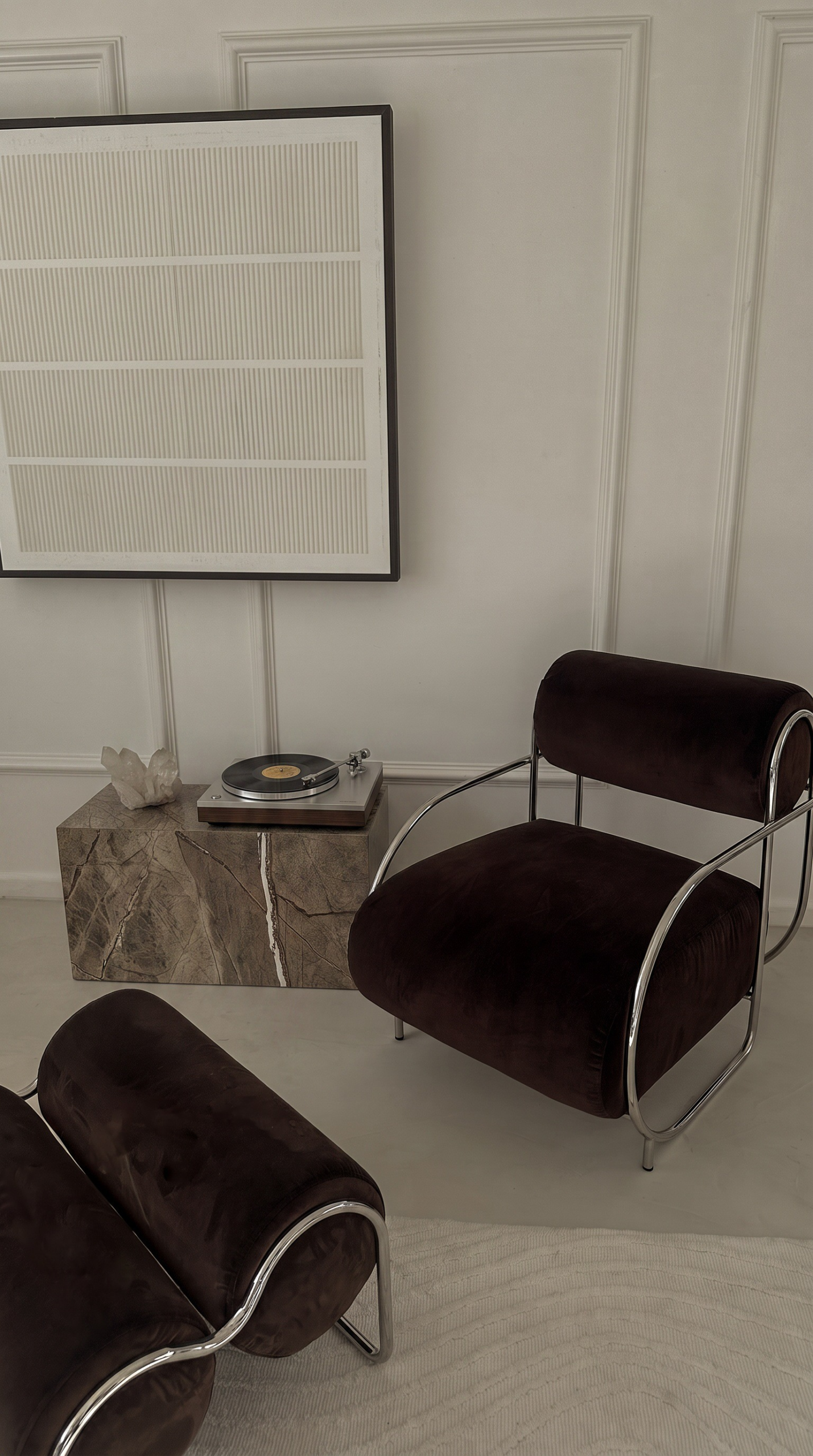
In my own space I’d build around one showstopper, an oversized mirror I actually own, five feet by nine feet with beveled glass and a zigzag trim that at first glance reads as modern, but sit it next to a chevron accent chair along the wall, fronting a square, oversized coffee table with just a hint of vintage in it, and suddenly the whole room shifts. One piece can carry a room. That mirror came out of my own boutique on Chestnut, and it still runs the show wherever it goes.
Bedroom.
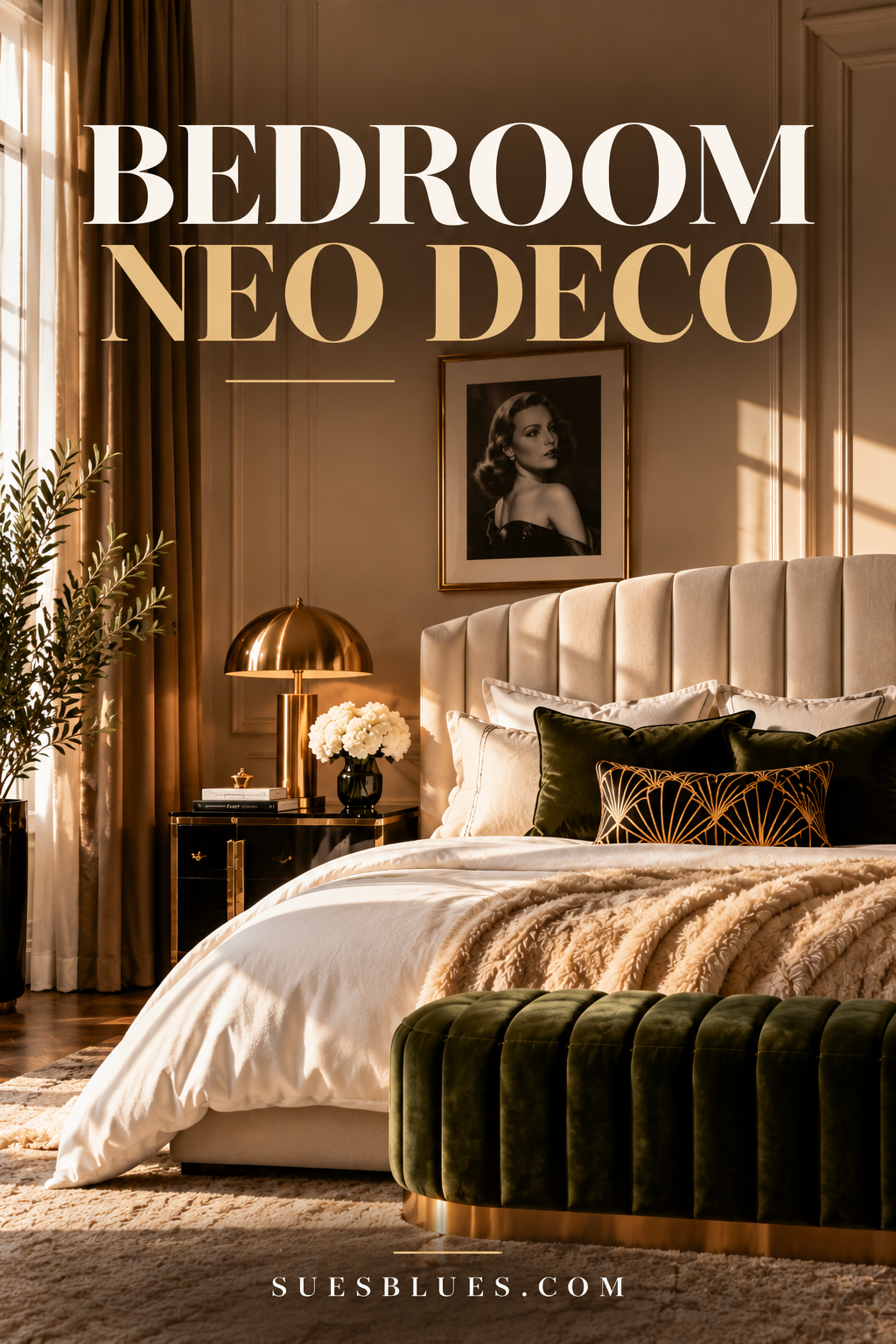
Layered lighting over one big overhead fixture, a lacquered nightstand, brass hardware, and a headboard upholstered in a jewel tone velvet. This is the room where restraint matters most, one or two pieces, nothing more.
Bathroom.
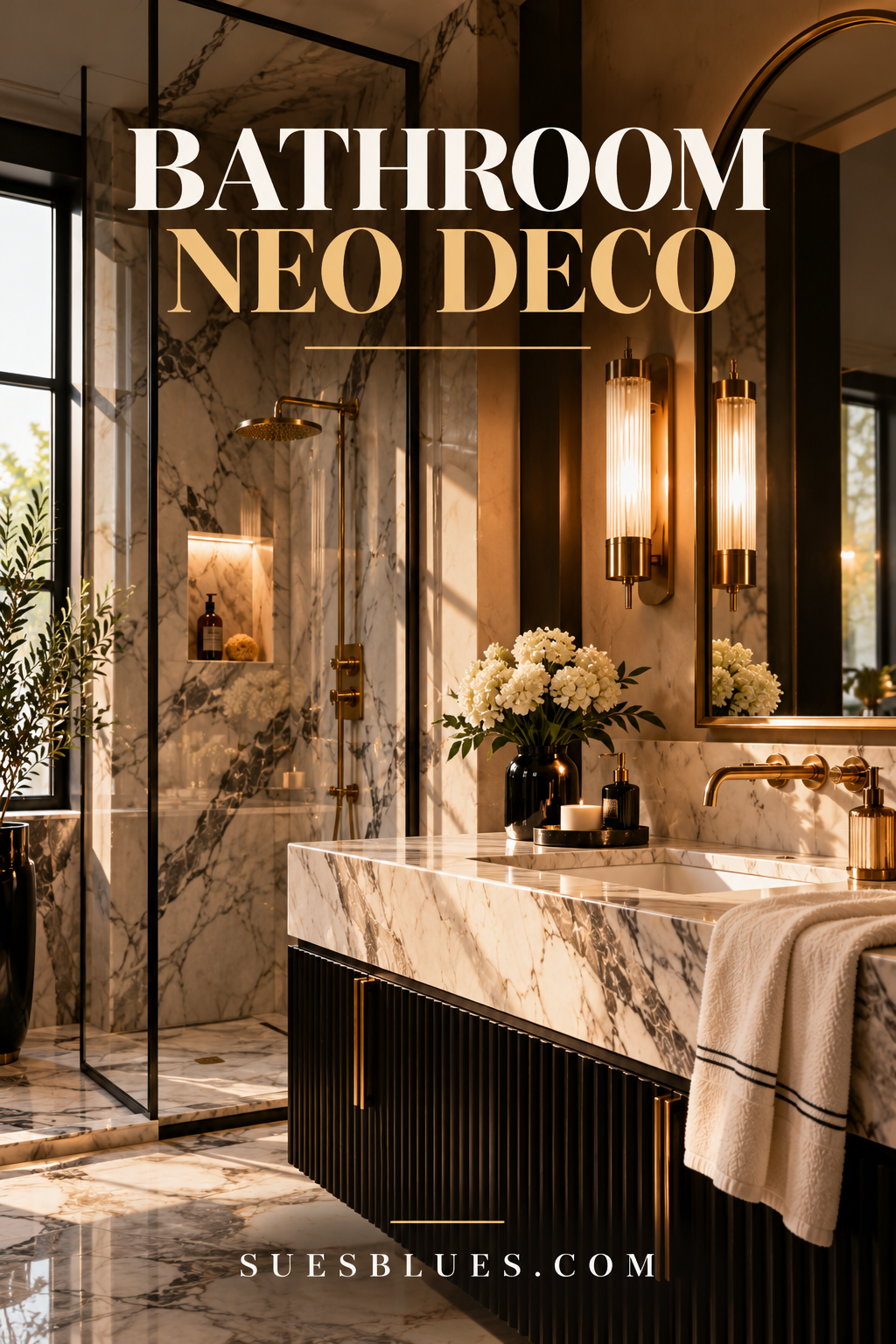
This is where Neo Deco photographs best and costs the least to try. A brass framed mirror, marble or marble look tile, and one piece of black and white geometric flooring or a patterned bath mat standing in for it.
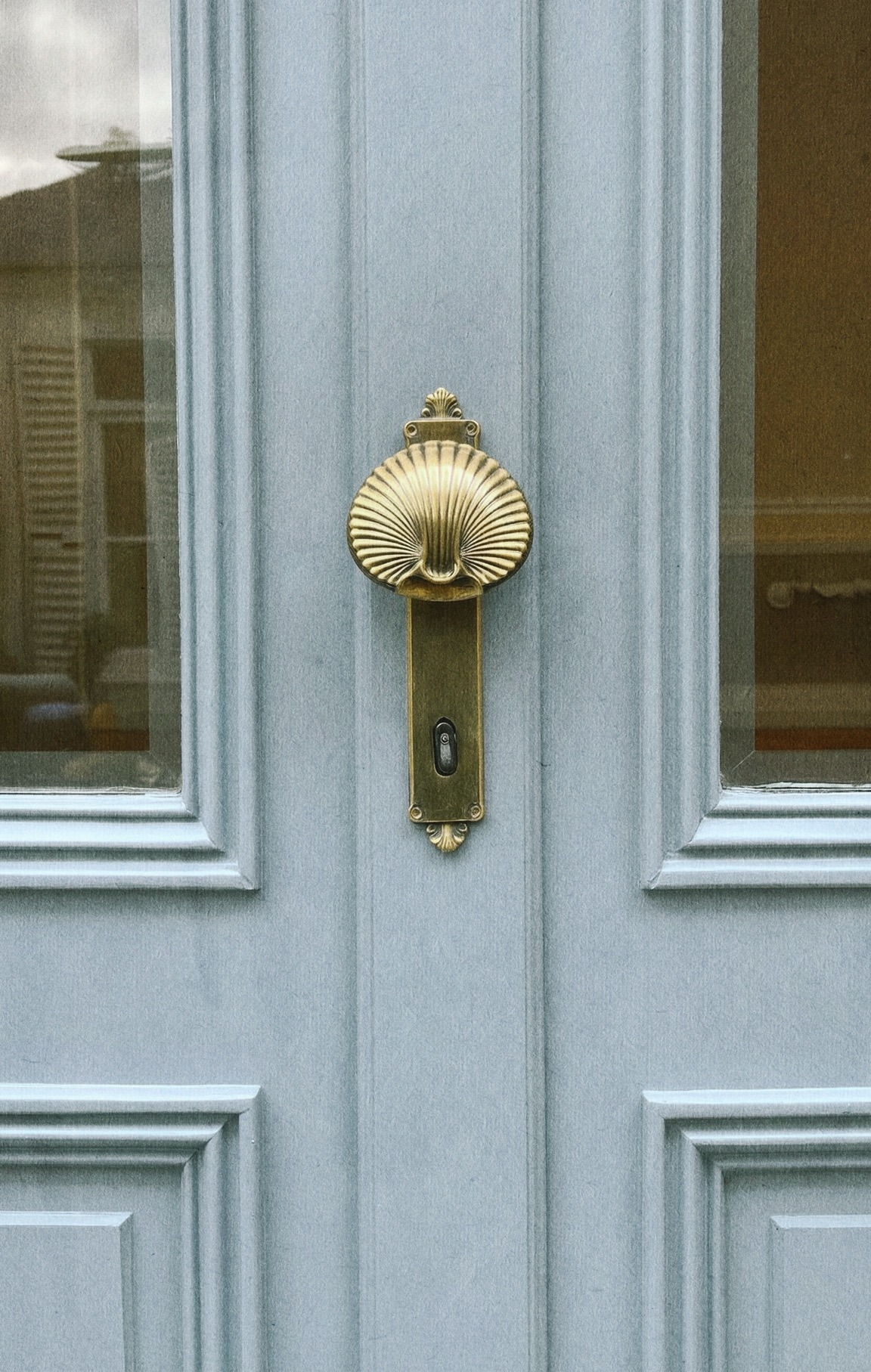
Home office. This is the room I’ve actually written a full post about already, on dressing for comfort without giving up looking put together while you work from home. A lacquered desk accessory tray, a brass reading lamp, and yes, what you’re wearing while you sit there. Comfortable doesn’t have to mean sloppy.
Glamour as Sanctuary, Not Performance
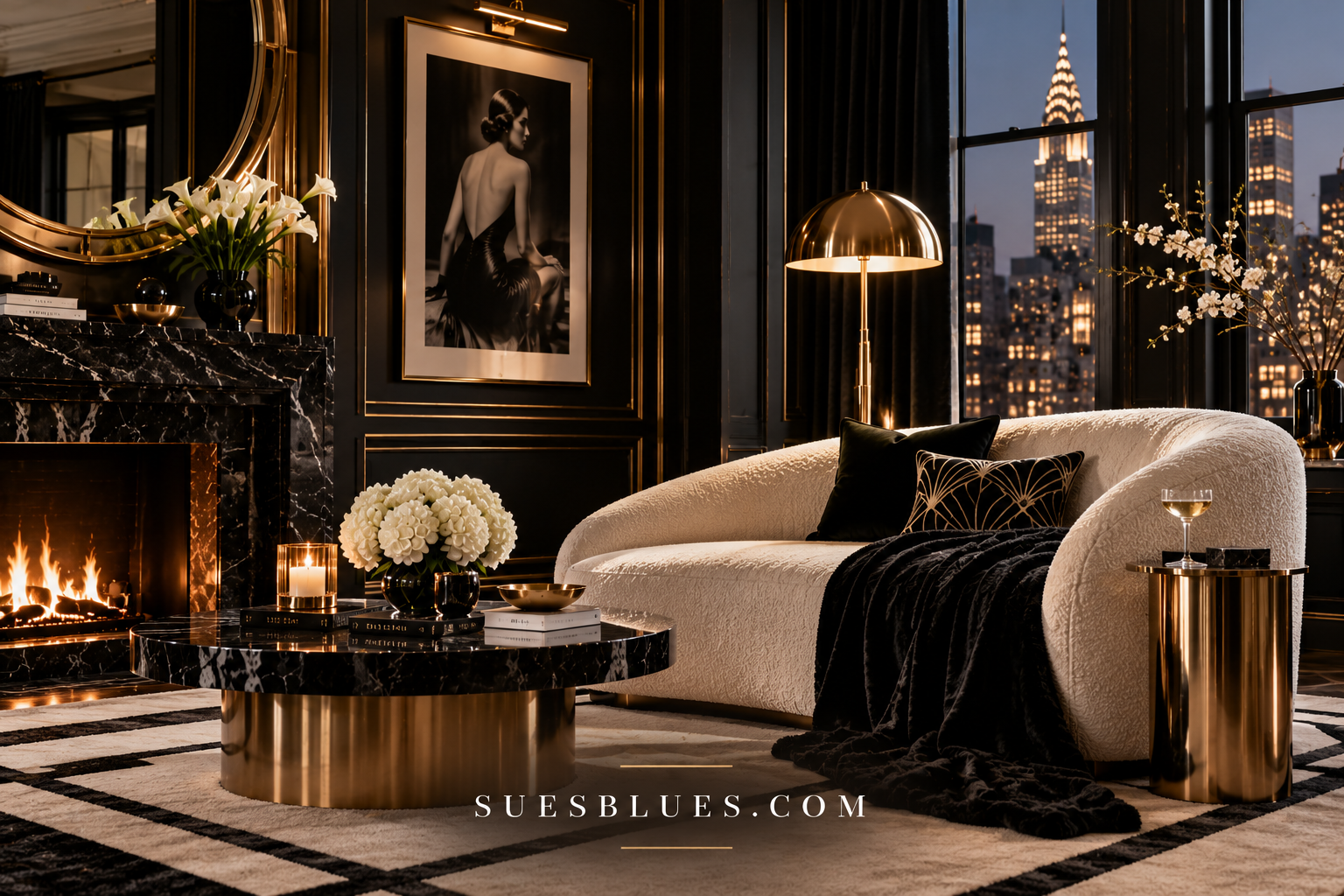
Old Hollywood glamour can feel inviting, or, done wrong, it can feel stuffy, too over the top, more about impressing a guest than holding the person who lives there. But done right, the pieces just speak for themselves. They say come on in. Done really right, they say stay. Not just stunning to look at, but inviting, encapsulating, the kind of room where you look around and think, I don’t want to leave. That’s not performance. That’s what a retreat actually feels like when it works.
I’ve written a full guide to building exactly that, turning one room, or even one corner of a room, into a real retreat rather than a Pinterest fantasy that only looks good for guests. Neo Deco belongs in that conversation, not as decoration for an audience, but as a room that holds you.
Neo Deco, Quick Answers
What is Neo Deco? A softened, livable revival of 1920s and 30s Art Deco, geometric shapes like chevrons and sunbursts, brass and chrome trim, lacquered wood, and muted jewel tones in place of the original’s bolder primary palette.
Is Art Deco actually making a comeback in 2026? Yes, design publications and Pinterest’s own trend forecasting have both named it as one of the year’s defining directions, and it’s showing up in real celebrity homes, not just showrooms.
How do you do Art Deco without it looking costumey? Pick one statement piece and build around it rather than committing an entire room. A single mirror, light fixture, or piece of furniture does the work, the rest of the room should stay quiet.
What colors define Neo Deco? Muted sapphire, emerald and gold against ivory and light grey, softer than the bold primary jewel tones of the original 1920s movement.
Hollywood has always been about trend making, about leaving you feeling something, wanting to emulate something. Neo Deco is that, elevated. It says come in, get comfortable, feel the awe, and know you’re somewhere special.